Fed holds rates steady as oil tops $126
May 01, 2026
What This Means
Oil prices will climb further: With Iran currently disrupting roughly 20 percent of the world's oil supply, the market faces a severe shortage that is likely to push crude prices higher than the recent $126 peak.
The dollar will weaken: As Jerome Powell signals a massive 100 basis point rate cut to near-zero levels, the U.S. Dollar is poised to lose ground against major currencies like the pound, especially as U.S. Inflation data shows gasoline prices have already surged 24.1%.
This reflects observable market data. Individual situations vary — always verify with your own research.
Today's Summary
- Fed holds rates steady while oil surges to $126 amid Gulf supply disruptions.
Top Signals
- Iran: Iran disrupts global oil supply causing geopolitical tension (20%) ↗ source
- U.S. Inflation: U.S. Inflation jumps as war-driven fuel costs complicate Fed outlook ↗ source
- U.S. Dollar: U.S. Dollar strengthens as markets weigh inflation and rate outlook ↗ source
- Jerome Powell: Jerome Powell addresses retrospective rate cuts and future policy direction (100bps) ↗ source
Read analysis
The Federal Reserve kept rates steady as Jerome Powell weighed rising U.S. Inflation against global supply shocks, particularly after Iran threatened to disrupt shipping through the Strait of Hormuz, pushing oil prices to their highest levels since 2022. This geopolitical tension, which halted roughly 20 percent of global oil supply, drove gasoline costs up by 24.1 percent in March, complicating the central bank's decision to maintain current monetary policy. Meanwhile, the U.S. Dollar faced mixed pressure as the British pound gained ground, reflecting divergent economic signals between the two major economies. Ultimately, the combination of domestic price spikes and international instability forced policymakers to pause rather than adjust rates immediately.
Why it happened
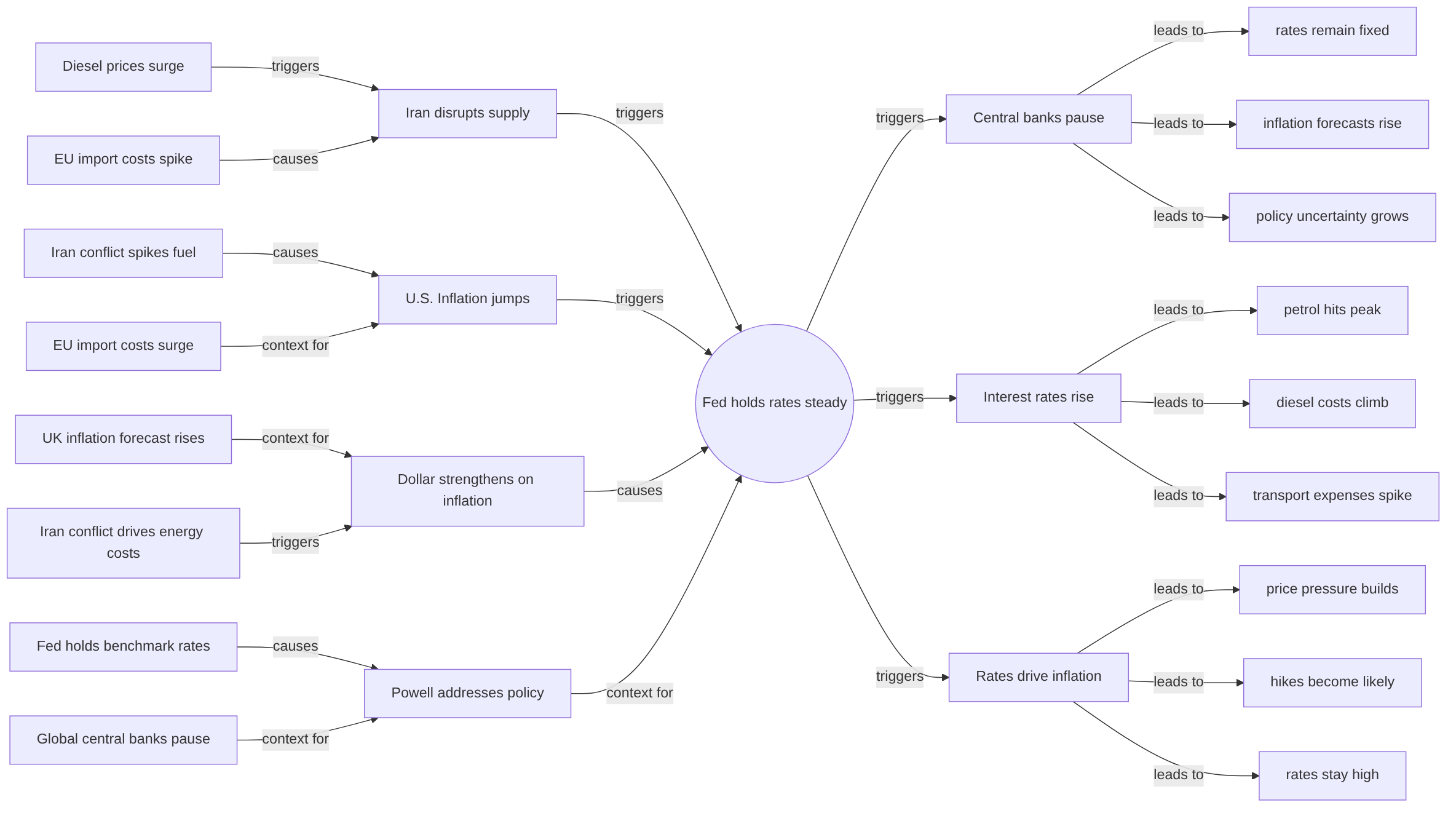
Iran disrupts supply: Geopolitical tension from Iran disrupting oil supply pressures the U.S. Dollar and influences Jerome Powell's decision. ↗ source
U.S. Inflation jumps: Rising U.S. Inflation from fuel costs forced the Federal Reserve to pause rate hikes. ↗ source
Dollar strengthens on inflation: A stronger U.S. Dollar reflects market reactions to U.S. Inflation concerns and the Fed pause. ↗ source
Powell addresses policy: Jerome Powell's remarks on past cuts and future direction frame the Federal Reserve's decision to hold rates steady. ↗ source
Read analysis
Rising U.S. Inflation expectations and geopolitical tensions involving Iran have pushed central banks to maintain steady interest rates across major economies. These immediate pressures stem from escalating conflict costs in the Middle East and a broader shift in global energy markets that has forced policymakers like Jerome Powell to pause further adjustments. This pattern highlights how external shocks and revised economic outlooks are currently dictating the pace of monetary policy decisions.
What comes next
Central banks pause: Major global central banks including the Fed and Bank of England held rates steady.
↳ rates remain fixed
↳ inflation forecasts rise
↳ policy uncertainty grows
Interest rates rise: Rising geopolitical tensions drove petrol and diesel prices to record highs.
↳ petrol hits peak
↳ diesel costs climb
↳ transport expenses spike
Rates drive inflation: Economists revised UK inflation expectations upward for the second quarter of 2026.
↳ price pressure builds
↳ hikes become likely
↳ rates stay high
Read analysis
With Jerome Powell and the Federal Reserve holding rates steady, market attention will pivot to the escalating supply risks in the Middle East as Iran threatens to disrupt a fifth of global oil flows. The sudden surge in U.S. Inflation driven by soaring gasoline prices could force policymakers to reconsider their current stance, potentially weakening the U.S. Dollar against major currencies like the British pound. Investors should monitor how these geopolitical tensions and domestic price pressures interact to influence the trajectory of crude oil and equity markets in the coming weeks.