US Blockade Halts Hormuz Traffic, Gas Jumps 3.5%
April 22, 2026
What This Means
Oil prices will climb further: Despite a brief dip during Asia hours, the continued naval blockade ordered by Donald Trump and the near-total halt of shipping traffic through the Strait of Hormuz signal that supply constraints are far from resolved. With only three ships passing in 24 hours compared to normal volumes, the market is likely to price in a more severe and prolonged disruption than currently reflected.
European energy costs are set to surge: Natural gas prices have already jumped 3.5% to 41.65 euros per megawatt hour as geopolitical tensions threaten broader regional stability. Investors should anticipate further volatility in energy sectors, especially as the United Kingdom reports rising inflation to 3.3%, which may force central banks to maintain tighter monetary policies in the face of escalating energy costs.
This reflects observable market data. Individual situations vary — always verify with your own research.
Today's Summary
- Naval blockade cuts shipping, spiking gas prices despite oil dip.
Top Signals
- Donald Trump: US President orders military to maintain naval blockade on Iran ↗ source
- Strait of Hormuz: Shipping traffic halted amid uncertainty over Iran peace talks ↗ source
- United Kingdom: Inflation rate rises to 3.3% driven by surging fuel costs (3.3) ↗ source
Read analysis
Donald Trump has ordered the continuation of a naval blockade on Iranian ports, a move that has effectively halted shipping traffic through the Strait of Hormuz and sparked immediate volatility in global energy markets. While oil prices dipped slightly amid lingering uncertainty over U.S.-Iran peace negotiations, European natural gas costs surged as traders braced for potential supply disruptions in the region. Compounding these geopolitical tensions, the United Kingdom reported a rise in inflation to 3.3%, adding pressure to an already fragile economic outlook as energy costs threaten to feed further price increases.
Why it happened
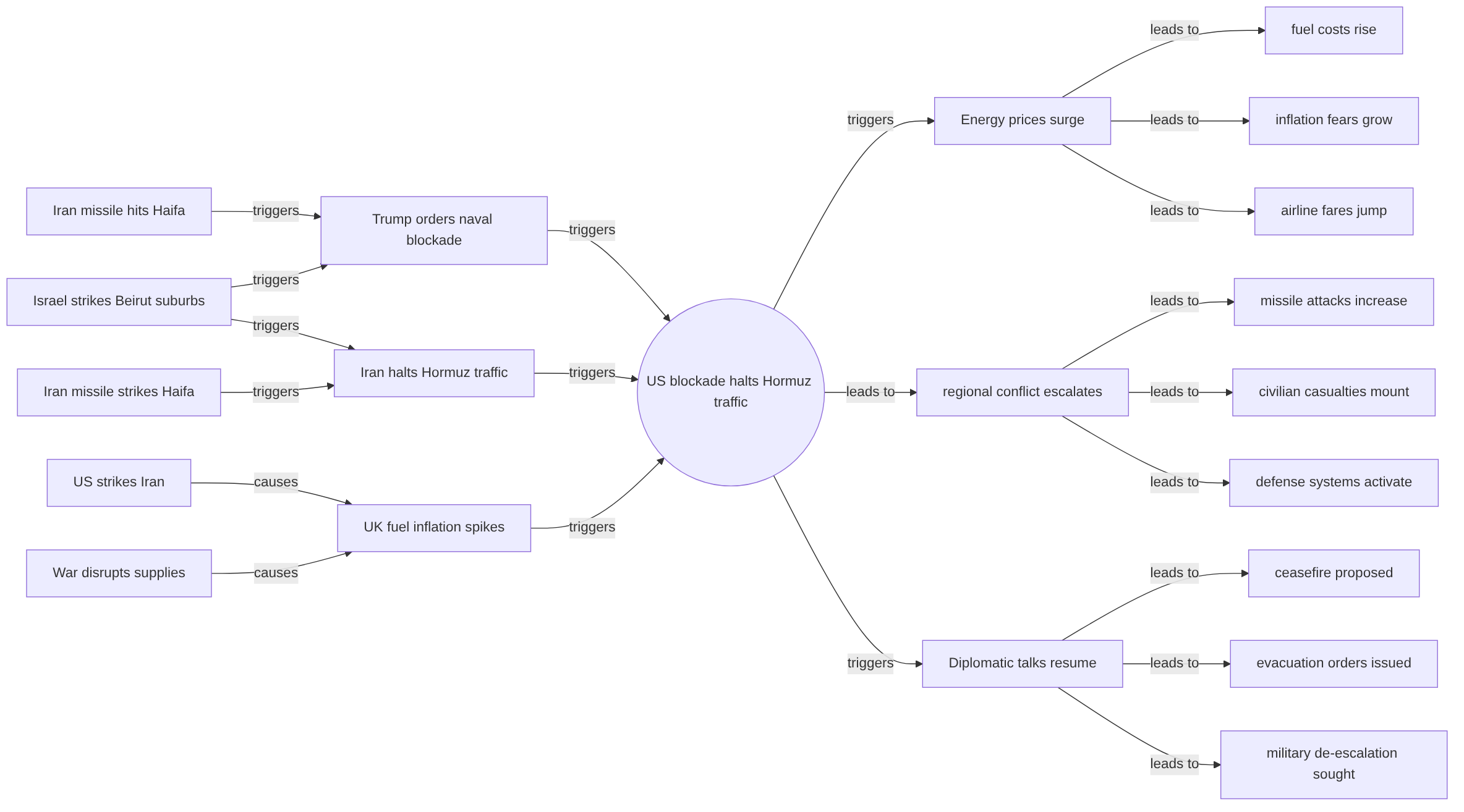
Trump orders naval blockade: President Donald Trump's military directive halts shipping through the Strait of Hormuz, spiking energy costs. ↗ source
Iran halts Hormuz traffic: Shipping stops in the Strait of Hormuz amid uncertainty over peace talks. ↗ source
UK fuel inflation spikes: Surging fuel costs from the Strait of Hormuz disruption push United Kingdom inflation to 3.3%. ↗ source
Read analysis
Escalating military clashes in the Middle East, including Israeli strikes in Lebanon and an Iranian missile attack on Haifa, have directly triggered a sharp surge in global oil and energy prices. This volatility is underpinned by broader geopolitical tensions involving the Strait of Hormuz and divergent monetary policies from central banks in the United Kingdom, the US, and India that are struggling to contain inflationary pressures. The pattern underscores how quickly regional conflicts can disrupt global supply chains and send shockwaves through financial markets.
What comes next
Energy prices surge: Crude oil and fuel costs spike sharply following the blockade of the Hormuz Strait.
↳ fuel costs rise
↳ inflation fears grow
↳ airline fares jump
regional conflict escalates: Military strikes and missile exchanges intensify across Lebanon, Israel, and the Persian Gulf.
↳ missile attacks increase
↳ civilian casualties mount
↳ defense systems activate
Diplomatic talks resume: Regional leaders and US envoys engage in urgent negotiations to secure a ceasefire.
↳ ceasefire proposed
↳ evacuation orders issued
↳ military de-escalation sought
Read analysis
The continued naval blockade ordered by Donald Trump has effectively choked shipping through the Strait of Hormuz, creating a fragile supply environment that threatens to reignite energy price spikes if the conflict escalates further. While oil prices dipped briefly on uncertainty over peace talks, the sharp jump in European natural gas and the persistent threat to Iran's infrastructure suggest that any disruption to power generation could send energy markets soaring again. Investors should also monitor the United Kingdom, where rising inflation to 3.3% adds a layer of complexity to the global economic outlook as central banks weigh the impact of energy costs on price stability. The coming days will likely hinge on whether diplomatic efforts can restore calm or if the blockade forces a broader reevaluation of global energy security.