US Blockade Halts Shipping as WTI Hits $94.16
April 23, 2026
What This Means
Oil prices will climb further: With the Strait of Hormuz traffic halted to just three ships daily under Donald Trump's naval blockade orders, the physical supply constraint is severe enough to push WTI futures higher than the current $94.16 level.
Energy sector volatility will intensify: As European natural gas prices already jumped 1.4% and the United Kingdom reports rising inflation to 3.3%, energy-related equities are poised to face heightened swings as markets reassess the cost of fuel amid these geopolitical tensions.
This reflects observable market data. Individual situations vary — always verify with your own research.
Today's Summary
- Naval blockade in Hormuz cuts supply, pushing oil and gas prices higher.
Top Signals
- Donald Trump: US President orders continued naval blockade in Strait of Hormuz ↗ source
- United Kingdom: Inflation rate rises to 3.3% driven by surging fuel prices (3.3%) ↗ source
- Ceasefire extension: European natural gas prices increase 1.4% following ceasefire extension in volatile trading (42.48 euros/mwh) ↗ source
Read analysis
Tensions in the Middle East surged after Donald Trump ordered the continuation of a naval blockade targeting Iran, effectively choking off vital shipping lanes. This directive caused traffic through the Strait of Hormuz to nearly halt, driving immediate spikes in crude oil and European natural gas prices as markets priced in a potential supply shortage. Compounding the energy volatility, inflation data from the United Kingdom showed a rise to 3.3%, adding pressure to global commodity valuations amid fears of prolonged geopolitical disruption.
Why it happened
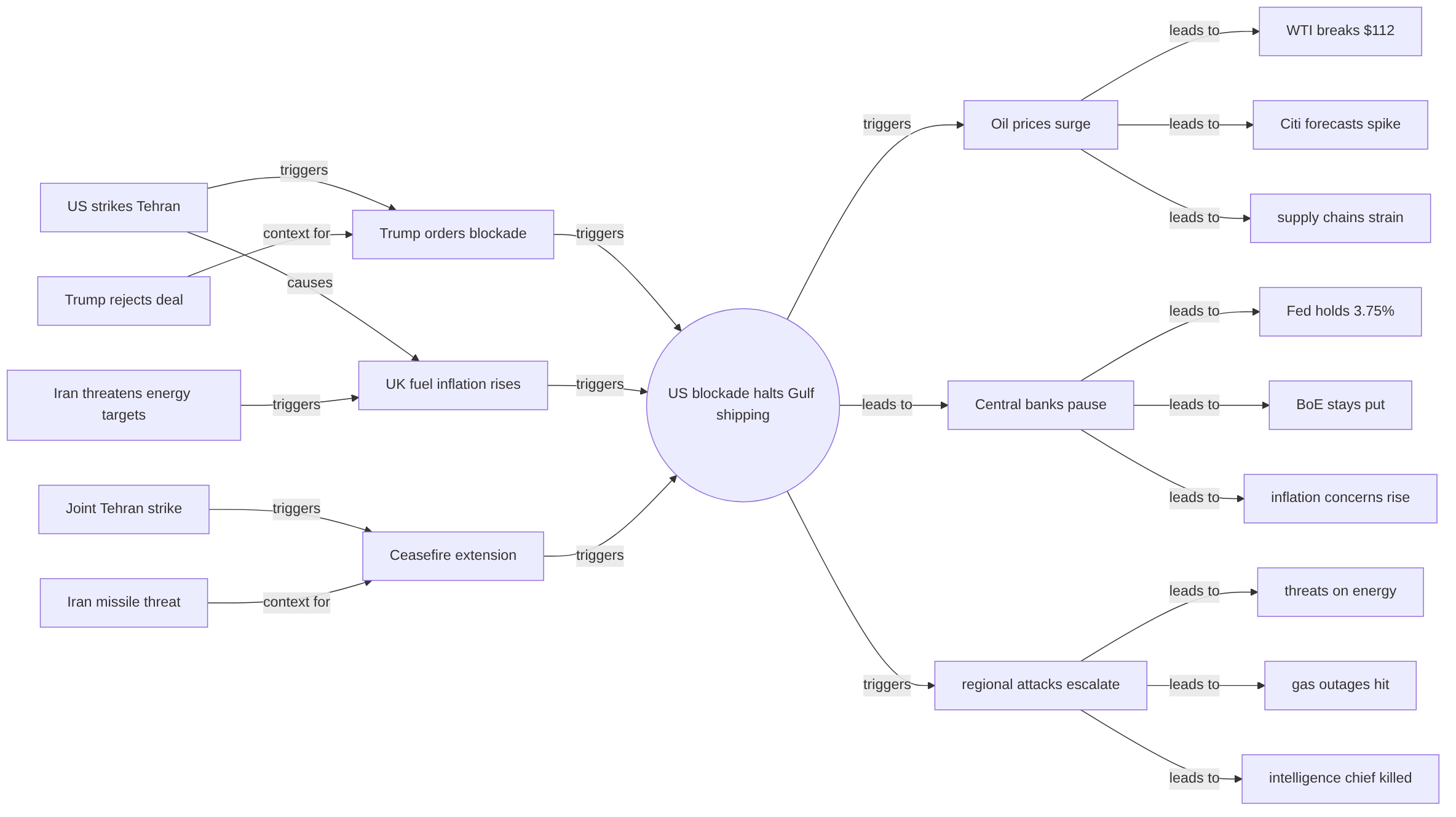
Trump orders blockade: President Donald Trump's naval directive immediately halted shipping flows through the strategic Strait of Hormuz. ↗ source
UK fuel inflation rises: Surging fuel costs from the shipping halt pushed United Kingdom inflation to 3.3 percent. ↗ source
Ceasefire extension: A Ceasefire extension sparked volatile trading that pushed European natural gas prices up by 1.4 percent. ↗ source
Read analysis
Rising oil prices were driven immediately by Iran's increased export volumes and escalating attacks on energy infrastructure that threatened the Strait of Hormuz. These tensions are rooted in a broader conflict where Donald Trump is set to address the nation following missile strikes on US bases and failed attempts to secure a Ceasefire extension. Meanwhile, central banks in the United Kingdom and the US held interest rates steady, reflecting the market's uncertainty as geopolitical risks continue to disrupt global energy flows.
What comes next
Oil prices surge: Brent crude climbs toward $150 as supply fears intensify amid Gulf shipping disruptions.
↳ WTI breaks $112
↳ Citi forecasts spike
↳ supply chains strain
Central banks pause: Fed and Bank of England hold rates steady as inflation risks from energy spikes grow.
↳ Fed holds 3.75%
↳ BoE stays put
↳ inflation concerns rise
regional attacks escalate: Iran threatens US and Israeli energy infrastructure while strikes disrupt Tehran gas supplies.
↳ threats on energy
↳ gas outages hit
↳ intelligence chief killed
Read analysis
With Donald Trump ordering the naval blockade on Iranian ports to continue, the near-total halt of traffic through the Strait of Hormuz suggests that WTI crude prices will likely test new highs as the supply shock deepens. Investors should monitor whether the conflict escalates further following recent Israeli strikes in Lebanon, as any disruption to regional fuel and gas flows could push European natural gas prices even higher. Meanwhile, the United Kingdom's rising inflation to 3.3% adds pressure on central banks to maintain tight monetary policies, potentially complicating the global economic outlook if energy costs remain elevated. A potential Ceasefire extension would be the critical variable to watch, as any diplomatic breakthrough could rapidly reverse these price surges and stabilize shipping routes.