Iran blocks Hormuz as oil surges to $107.92
April 27, 2026
What This Means
Oil prices will climb further: The closure of the Strait of Hormuz by Israel and the U.S. has triggered a supply shock that is set to deepen as the market shifts from a surplus to a 9.6 million barrel per day deficit in Q2 2026. With U.S.-Iran negotiations stalled and crude already rising to $107.92, the physical scarcity of barrels will likely drive prices higher than current levels.
Energy sector equities are poised to outperform: As geopolitical tensions escalate and inflation holds at 3.3 percent, investors will increasingly favor energy assets that benefit from the Strait of Hormuz disruption. The looming structural deficit means companies with exposure to crude production are positioned to see significant valuation gains relative to broader markets.
This reflects observable market data. Individual situations vary — always verify with your own research.
Today's Summary
- Strait closure and conflict drive oil prices to $107.92 amid supply fears.
Top Signals
- Israel: Israeli attacks on Iran trigger regional supply disruptions ↗ source
- Strait of Hormuz: Iran blocks Strait of Hormuz causing global shipping delays ↗ source
- Federal Reserve: US inflation rises to 3.3 percent in March (3.3%) ↗ source
- U.S.-Iran negotiations: Stalled U.S.-Iran negotiations contribute to oil market deficit (9.6mb/d deficit) ↗ source
Read analysis
Escalating tensions between the United States and Iran have driven oil prices up 2.5% to $107.92 a barrel after Israel and American forces launched attacks that effectively closed the Strait of Hormuz. This supply shock has flipped the market outlook from a surplus to a significant deficit, while stalled U.S.-Iran negotiations have left traders uncertain about when the blockade might lift. Compounding the pressure on global energy costs, recent data showing U.S. consumer inflation at 3.3 percent has heightened concerns that the Federal Reserve will struggle to stabilize prices amidst such a volatile geopolitical landscape.
Why it happened
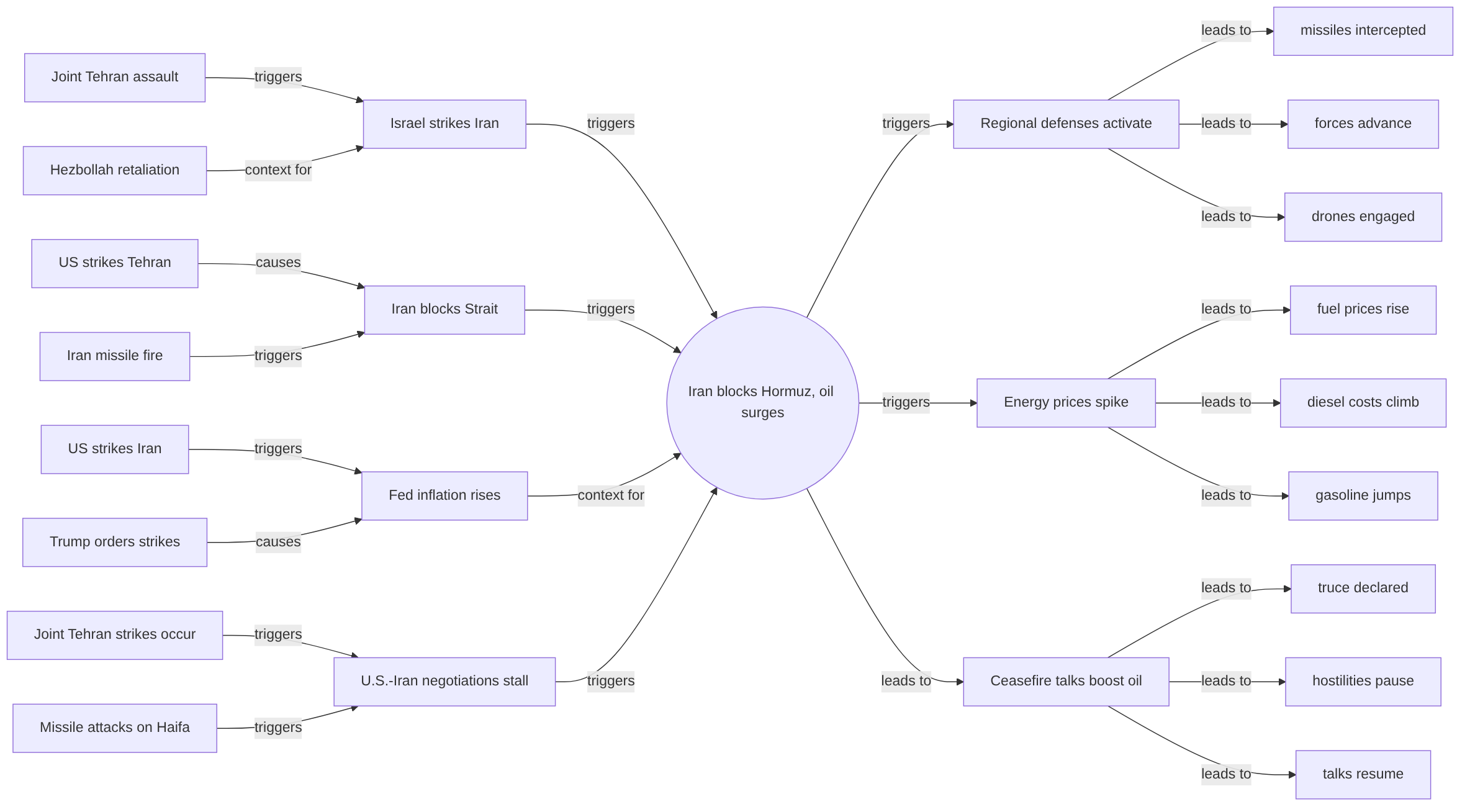
Israel strikes Iran: Israeli attacks on Iran spark regional supply fears that block the Strait of Hormuz. ↗ source
Iran blocks Strait: A blockade in the Strait of Hormuz cuts global shipping routes, sending oil prices soaring. ↗ source
Fed inflation rises: Rising Federal Reserve inflation data complicates the economic outlook as Israel tensions drive energy costs higher. ↗ source
U.S.-Iran negotiations stall: Stalled talks heighten fears of a Strait of Hormuz closure, driving oil prices higher. ↗ source
Read analysis
Escalating tensions in the Middle East, marked by Israel's military incursions into southern Lebanon and intercepted missile attacks on Saudi Arabia, have directly triggered a surge in global oil and energy prices. This volatility is rooted in the broader geopolitical context of the joint U.S.-Iran strikes on Tehran and the ongoing uncertainty surrounding U.S.-Iran negotiations, which have disrupted supply confidence. The pattern highlights how regional conflicts can rapidly transmit shockwaves through global markets, even as major central banks like the Federal Reserve maintain steady interest rates amidst rising inflationary pressures.
What comes next
Regional defenses activate: Saudi and UAE forces intercept missiles while Israel expands operations in Lebanon.
↳ missiles intercepted
↳ forces advance
↳ drones engaged
Energy prices spike: Crude, jet fuel, and gasoline prices spike following attacks on Iranian infrastructure.
↳ fuel prices rise
↳ diesel costs climb
↳ gasoline jumps
Ceasefire talks boost oil: A two-week truce brokered by Pakistan halts active combat between the US and Iran.
↳ truce declared
↳ hostilities pause
↳ talks resume
Read analysis
With Israel and the United States intensifying strikes on Iranian energy infrastructure, the continued closure of the Strait of Hormuz threatens to transform a temporary supply scare into a sustained deficit that could push crude prices well above $107.92. Investors should closely monitor the outcome of stalled U.S.-Iran negotiations, as any failure to reopen the chokepoint will likely force the Federal Reserve to reconsider its stance on inflation, which has already climbed to 3.3 percent. A prolonged disruption could accelerate the shift from a global surplus to a massive shortfall by mid-2026, creating a volatile environment for energy stocks and broader market indices. The immediate path forward depends entirely on whether diplomatic efforts can secure safe passage for tankers before the conflict further erodes global supply confidence.