Iran strikes Gulf energy, oil tops $100
April 25, 2026
What This Means
Oil prices will climb further: With Kpler forecasting supply losses totaling 700 million barrels by the end of April following the closure of the Strait of Hormuz, the market is likely to price in a deeper deficit than currently reflected. This outlook is reinforced by the recent disruption where Iran forced two ships to turn back, signaling that the 10% of global oil supply at risk remains under immediate threat.
Consumer sentiment will drag on equity valuations: The University of Michigan reported a record-low consumer sentiment index of 49.8 in April, down from 53.3, suggesting that rising energy costs are already eroding household confidence. This sharp decline in sentiment indicates that broader equity markets face headwinds as inflation fears intensify alongside the geopolitical volatility.
This reflects observable market data. Individual situations vary — always verify with your own research.
Today's Summary
- Strait closure cuts 10% of supply, pushing prices above $100.
Top Signals
- Iran: Iran fires on ships in Strait of Hormuz (two ships) ↗ source
- University of Michigan: Consumer sentiment drops to record low (49.8) ↗ source
- Kpler: Forecasts oil supply losses from Strait closure (700 million barrels) ↗ source
Read analysis
Tensions in the Middle East have surged after Iran briefly disrupted the Strait of Hormuz, forcing two vessels to turn back and threatening a closure that could cut off 10% of global oil supply. This geopolitical friction has driven crude prices back above $100 a barrel, with Kpler forecasting significant supply losses of 700 million barrels by the end of April. The market's anxiety over these disruptions is further compounded by a sharp decline in consumer confidence, as the University of Michigan reported its April sentiment index hit a record low of 49.8. Together, these factors have created a volatile environment where energy security concerns are directly impacting both commodity valuations and broader economic outlooks.
Why it happened
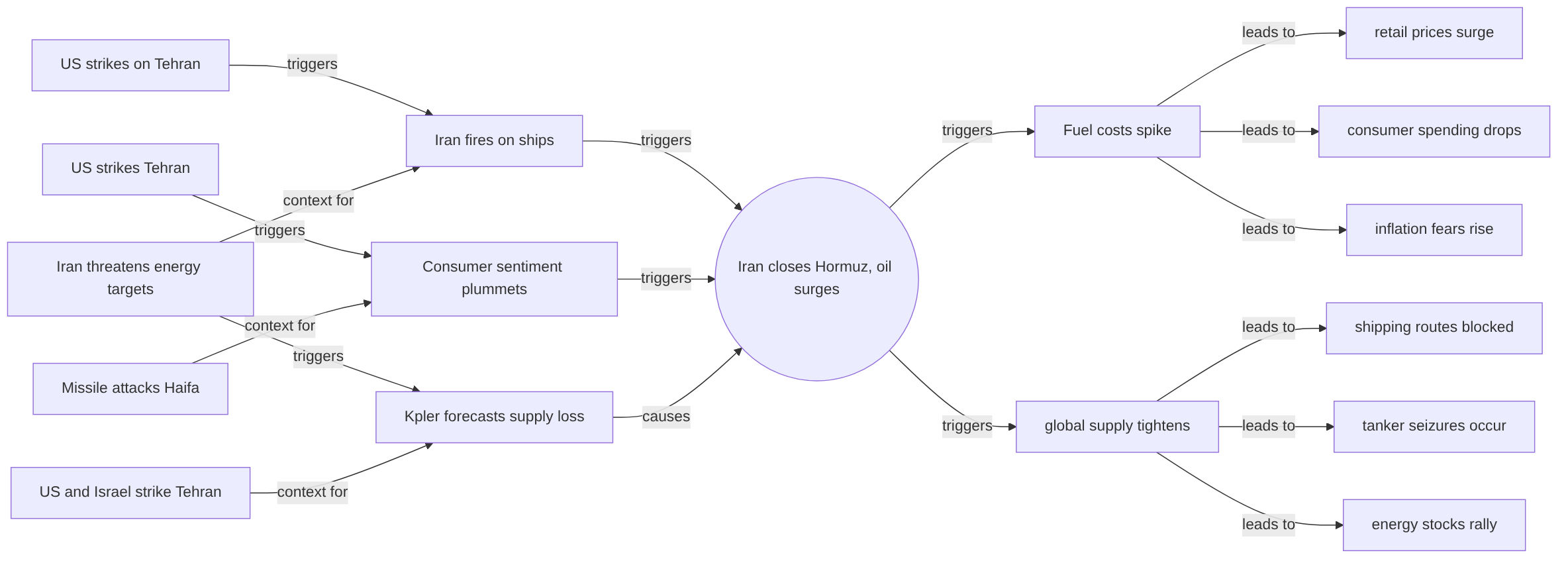
Iran fires on ships: Attacks on vessels in the Strait of Hormuz immediately shut down transit, sending oil prices soaring. ↗ source
Consumer sentiment plummets: Plunging consumer confidence at the University of Michigan signals economic distress that amplifies market panic over Iran. ↗ source
Kpler forecasts supply loss: Kpler projected that closing the Strait would cut global oil supply, driving prices higher. ↗ source
Read analysis
Petrol prices surged to 149.4p per litre following direct military escalation involving Iran, which disrupted supply chains and sent shockwaves through global energy markets. This volatility stems from a backdrop of intensified regional conflict, including missile attacks on Saudi Arabia and joint strikes on Tehran that threatened the critical flow of oil through the Strait of Hormuz. Such events underscore how quickly geopolitical instability in the Middle East can translate into immediate financial pressure for consumers worldwide.
What comes next
Fuel costs spike: Gasoline prices jumped to over five dollars a gallon as supply fears mounted.
↳ retail prices surge
↳ consumer spending drops
↳ inflation fears rise
global supply tightens: Strategic oil shipments face disruption with crude prices climbing above one hundred twelve dollars.
↳ shipping routes blocked
↳ tanker seizures occur
↳ energy stocks rally
Read analysis
With Iran escalating tensions by briefly closing the Strait of Hormuz, the market now faces a critical test as Kpler projects supply losses reaching 700 million barrels by month-end. This disruption has already pushed crude prices above $100 a barrel, threatening to reignite inflationary pressures that the University of Michigan recently signaled are deepening consumer sentiment to record lows. Investors should watch whether WTI can sustain these levels or if the threat of further regional conflict forces a sharp correction in energy stocks. The coming days will likely determine if the supply shock translates into sustained price hikes or a temporary spike as diplomatic channels reopen.