Iran blocks Hormuz as WTI rises to $94.16
April 24, 2026
What This Means
WTI Crude will climb further: With U.S. West Texas Intermediate (WTI) futures already rising $1.20 to $94.16 per barrel amid a sustained naval blockade and blocked Strait of Hormuz, the market is likely to price in even tighter physical supply constraints.
Energy stocks are poised to outperform: As geopolitical escalation drives volatile Jet Fuel prices and WTI Crude gains momentum, the energy sector is well-positioned to rally despite the broader BSE Sensex dipping 0.54 percent.
This reflects observable market data. Individual situations vary — always verify with your own research.
Today's Summary
- Geopolitical tensions and Strait blockades drive oil prices up while equities fall.
Top Signals
- Jet Fuel: Jet fuel prices rise amid U.S.-Israel attacks on Iran ↗ source
- WTI Crude: WTI crude rises $1.20 to $94.16 per barrel ($1.20) ↗ source
- BSE Sensex: BSE Sensex falls 0.54% to 78,092.61 amid Middle East jitters (0.54%) ↗ source
- Spot Gold: Spot gold falls to $4,694.23 per ounce breaking key range ($4,694.23) ↗ source
Read analysis
Escalating tensions between the United States and Iran, including attacks on Iranian targets and the continued blocking of the Strait of Hormuz, have driven WTI Crude prices higher as markets brace for potential supply disruptions. This surge in energy costs, alongside fears of broader regional conflict, pressured the BSE Sensex to decline as investors weighed the impact on corporate earnings and inflation. While Jet Fuel prices remained volatile due to these geopolitical shocks, Spot Gold briefly dipped below key levels as traders initially reacted to the immediate risk of a supply crunch rather than seeking safe-haven assets.
Why it happened
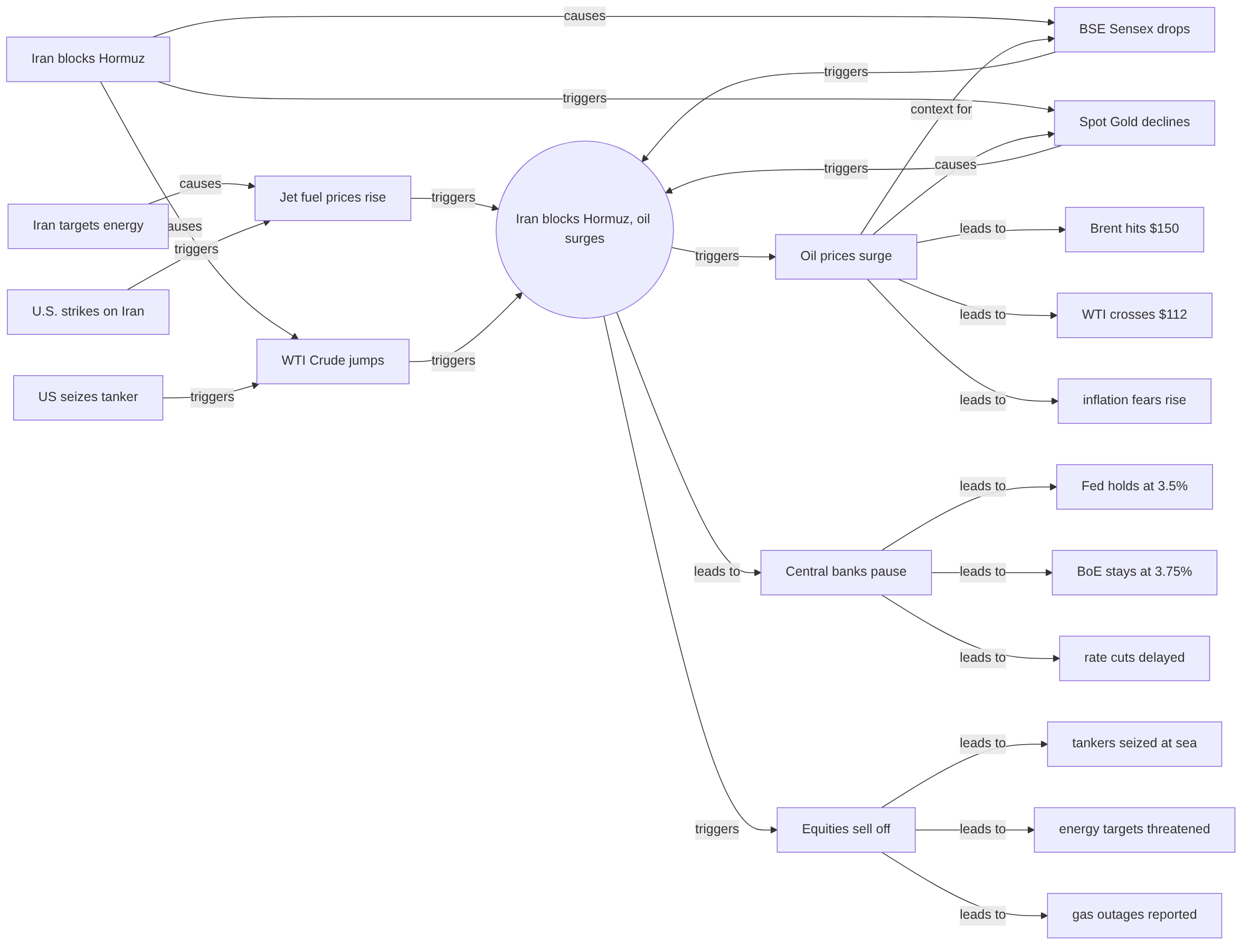
Jet fuel prices rise: Escalating U.S.-Israel attacks on Iran drove up jet fuel costs, fueling broader oil market volatility. ↗ source
WTI Crude jumps: WTI Crude rises $1.20 to $94.16 per barrel as supply fears mount. ↗ source
BSE Sensex drops: Middle East tensions drove the BSE Sensex down as investors fled risk. ↗ source
Spot Gold declines: Safe haven demand evaporates as oil surge signals immediate conflict escalation rather than prolonged uncertainty. ↗ source
Read analysis
Rising oil exports from Iran and a hawkish tone from US officials regarding the Strait of Hormuz have directly fueled volatility in global energy markets. These immediate pressures stem from escalating military tensions, including missile strikes on Israeli cities and threats of further grid bombardment by the US administration. Such a pattern highlights how geopolitical flashpoints in the Middle East continue to drive uncertainty in WTI Crude and Jet Fuel prices, while central banks in the US and UK maintain steady interest rates amidst the chaos.
What comes next
Oil prices surge: Global crude benchmarks jump as Hormuz blockade threatens major supply routes.
↳ Brent hits $150
↳ WTI crosses $112
↳ inflation fears rise
Central banks pause: Policymakers hold rates steady while assessing energy-driven inflation risks.
↳ Fed holds at 3.5%
↳ BoE stays at 3.75%
↳ rate cuts delayed
Equities sell off: Threats against energy infrastructure prompt naval seizures and regional strikes.
↳ tankers seized at sea
↳ energy targets threatened
↳ gas outages reported
Read analysis
Escalating tensions in the Middle East, marked by the U.S. and Israel attacks on Iran and the continued blockade of the Strait of Hormuz, are driving WTI Crude higher while keeping Jet Fuel costs volatile. The BSE Sensex dipped 0.54 percent as investors weighed the geopolitical risks against a Reserve Bank of India decision to hold rates steady. Meanwhile, Spot Gold briefly slipped below its recent trading range, suggesting a temporary shift in safe-haven demand despite the ongoing conflict. Investors should now monitor whether the naval standoff persists or if diplomatic channels reopen, as either outcome will dictate the next move for energy and equity markets.