
Iran strikes Gulf energy, crude hits $100
May 03, 2026
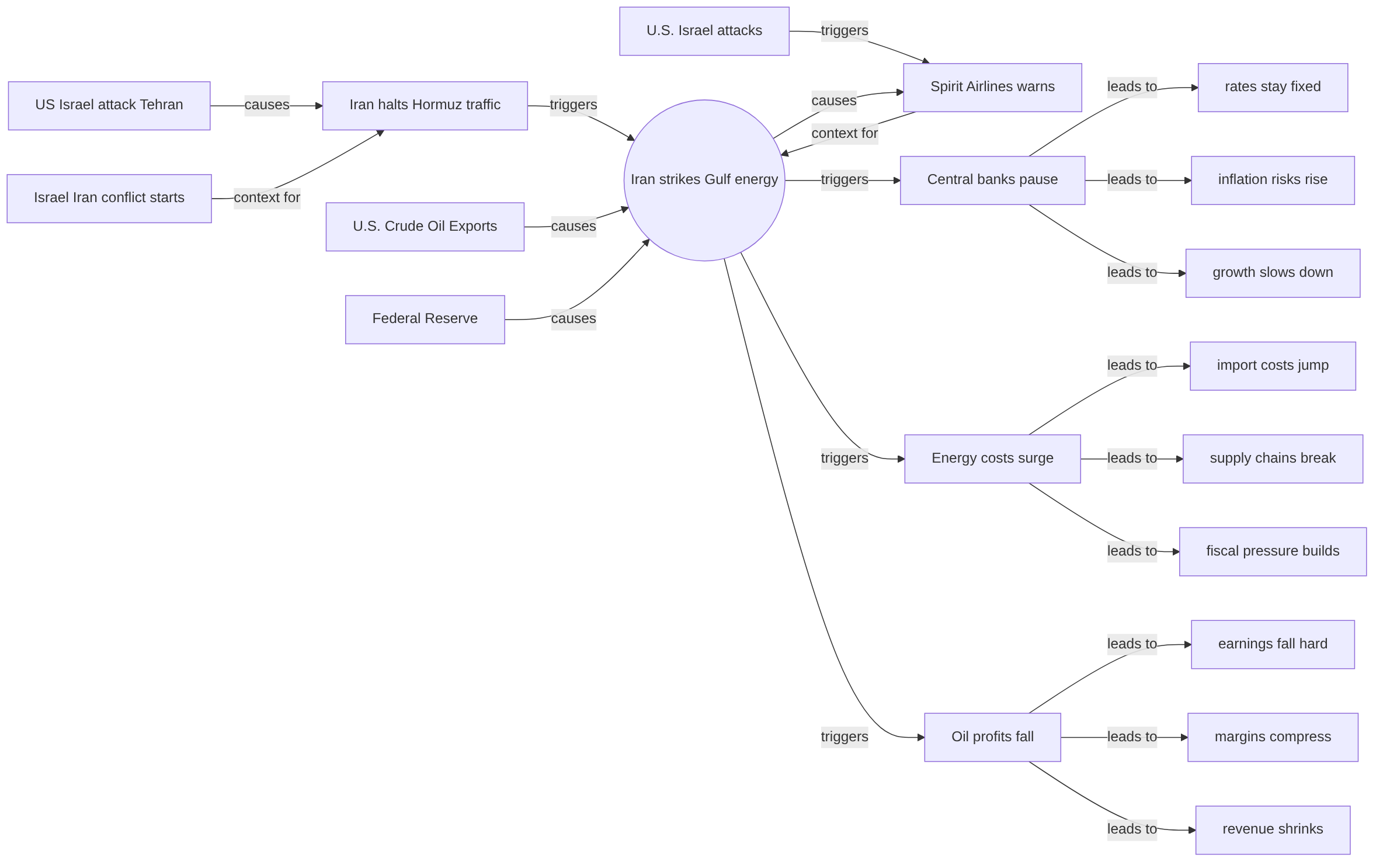
What This Means
Oil prices will climb further: Escalating tensions between Iran and regional powers, including strikes on ships in the Strait of Hormuz, threaten to disrupt critical shipping lanes and tighten global supply. This risk is compounded by rising operational costs, as major industry players now face a projected $4 billion increase in fuel spending by 2026.
Energy sector volatility will intensify: While the Federal Reserve held rates unchanged, the surge in U.S. Crude Oil Exports to 2.5 million barrels per day amidst geopolitical instability suggests a market struggling to balance record flows against sudden supply constraints. Investors should expect sharp swings as the industry grapples with the immediate impact of these security breaches on future profitability.
This reflects observable market data. Individual situations vary — always verify with your own research.
Today's Summary
- Iranian attacks on shipping and bases spike oil prices amid supply fears.
Top Signals
- Iran: Iran targets ships in Hormuz Strait (45 commercial ships) ↗ source
- Spirit Airlines: Spirit Airlines warns of 2026 losses (4 billion) ↗ source
- U.S. Crude Oil Exports: U.S. crude oil exports rise to 2.5 million barrels (2.5 million) ↗ source
- Federal Reserve: Federal Reserve holds rates unchanged in March (unchanged) ↗ source
Read analysis
Escalating tensions between Iran and Israel have disrupted global energy flows, as retaliatory strikes on Gulf states and the targeting of vessels in the Strait of Hormuz have forced dozens of commercial ships to reroute. While U.S. Crude Oil Exports have risen to roughly 2.5 million barrels per day since the conflict began, the immediate threat to shipping lanes is driving market anxiety. This volatility arrives even as the Federal Reserve held interest rates unchanged, leaving investors to weigh the geopolitical risks against steady monetary policy.
Why it happened
Iran halts Hormuz traffic: Iranian forces blocking the Strait of Hormuz directly disrupts global oil flows and spikes energy prices. ↗ source
Spirit Airlines warns: Spirit Airlines warns of 2026 losses as Iran conflict drives fuel costs higher. ↗ source
U.S. Crude Oil Exports: Rising U.S. crude oil exports increase global supply, which helps lower international energy prices. ↗ source
Federal Reserve: The Fed holding rates unchanged in March stabilizes borrowing costs, helping to moderate oil and energy price volatility. ↗ source
Read analysis
Escalating tensions between the U.S. and Iran have triggered the most severe disruption to global oil and gas supplies in history, while central banks like the Federal Reserve and its counterparts in Europe and Canada held interest rates steady to manage the resulting economic volatility. This crisis stems from a joint military strike on Tehran in April 2026 following a months-long conflict that began in February, which severely strained fuel availability and spiked jet fuel costs. The situation highlights how geopolitical flashpoints can rapidly override monetary policy efforts to stabilize energy markets.
What comes next
Central banks pause: Major central banks hold rates steady as conflict fuels inflation fears.
↳ rates stay fixed
↳ inflation risks rise
↳ growth slows down
Energy costs surge: European import bills spike while global supply chains face severe disruption.
↳ import costs jump
↳ supply chains break
↳ fiscal pressure builds
Oil profits fall: Major energy firms report sharp income declines despite market volatility.
↳ earnings fall hard
↳ margins compress
↳ revenue shrinks
Read analysis
The recent escalation involving Iran and the targeting of vessels in the Strait of Hormuz has injected immediate uncertainty into global energy markets, with U.S. Crude Oil Exports potentially facing new logistical hurdles despite recent volume increases. While the Federal Reserve maintained its current interest rate stance, the prospect of soaring fuel costs and a reported $4 billion spending jump for major carriers like Spirit Airlines suggests that inflationary pressures could remain stubbornly high. Investors should closely monitor the stability of the ceasefire and the flow of tankers through the Gulf, as any disruption could quickly push gasoline prices well above the recent $5.01 per gallon peak seen in 2022. The interplay between geopolitical tension and steady monetary policy will likely dictate whether oil prices stabilize or surge further in the coming weeks.