Iran closes Hormuz, oil tops $100
April 21, 2026
What This Means
Oil prices will climb further: With the Strait of Hormuz officially closed by Iran following President Trump's threats, the supply shock from the Iran War is now imminent, pushing crude above $100 a barrel and poised for another 4% rise.
Global food costs are set to surge: The disruption to Fertilizer supplies caused by the conflict will drive prices higher in the developing world, creating immediate inflationary pressure on essential commodities.
This reflects observable market data. Individual situations vary — always verify with your own research.
Today's Summary
- Iran closes the Strait of Hormuz, sending oil prices above $100.
Top Signals
- Strait of Hormuz: Iran closes strategic waterway, triggering global supply fears ↗ source
- Fertilizer supplies: Loss of fertilizer supplies drives expected surge in global food costs ↗ source
- Iran War: Conflict onset pushes commodity markets into volatility mode ↗ source
- Ed Miliband: UK minister announces net-zero measures to counter energy shock ↗ source
Read analysis
Tensions in the Middle East have escalated sharply after Iran declared the Strait of Hormuz closed, following aggressive threats from President Trump regarding the region's critical infrastructure. This immediate disruption to global shipping routes has driven oil prices above $100 a barrel, echoing the volatility seen during the Iran War. Beyond energy markets, the conflict threatens to severely impact Fertilizer supplies, which is expected to cause food prices to soar across the developing world. The sudden closure of this vital waterway has created a perfect storm of geopolitical risk and commodity scarcity that is reshaping market expectations.
Why it happened
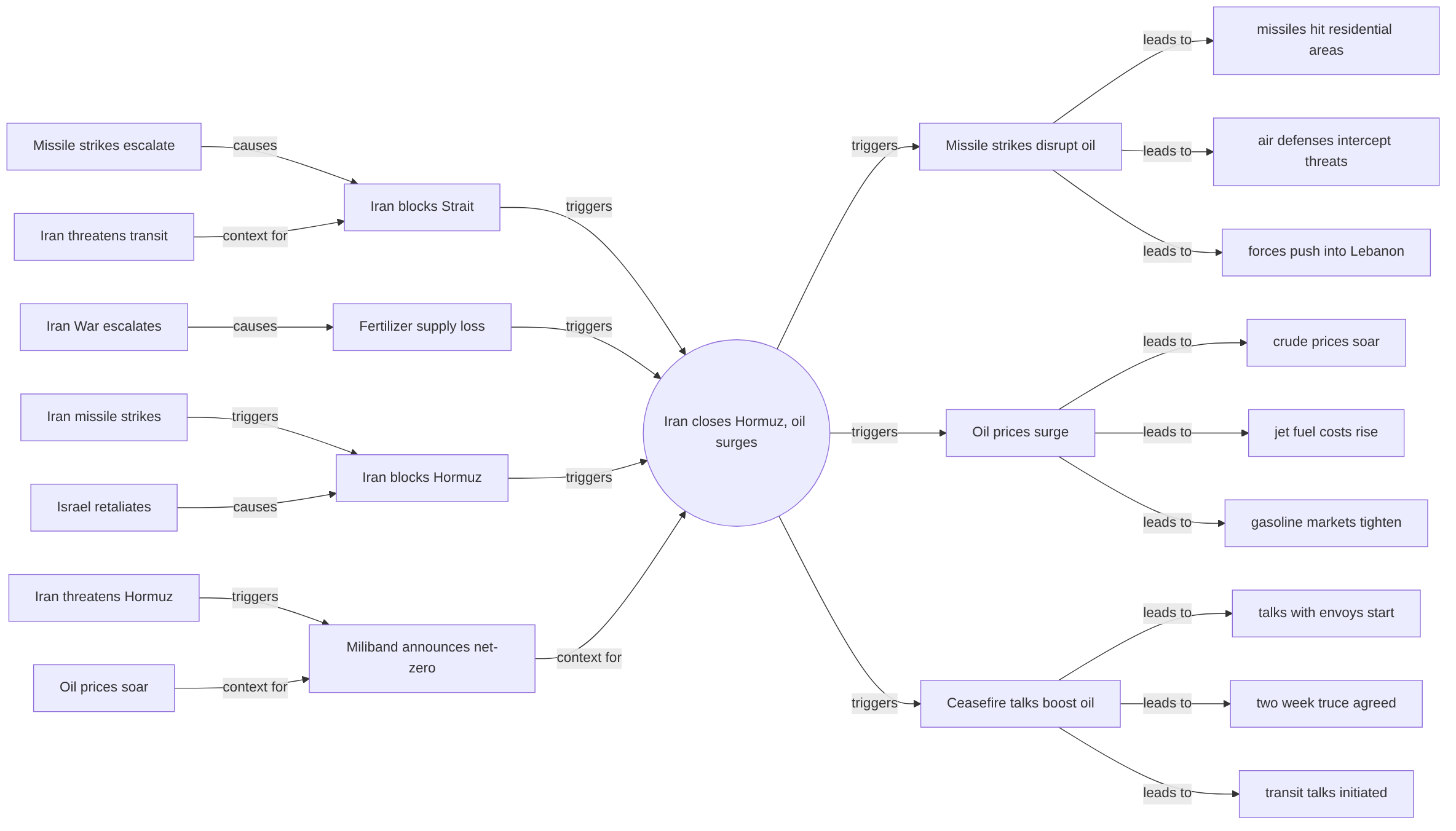
Iran blocks Strait: Closing the strategic waterway sparks immediate global fears of energy supply disruption. ↗ source
Fertilizer supply loss: Disrupted fertilizer shipments from the conflict zone drive expected global food cost spikes. ↗ source
↳ Iran War escalates: The Iran War disrupts regional logistics, threatening Fertilizer supplies and Strait of Hormuz transit. ↗ source
Iran blocks Hormuz: Conflict onset pushes commodity markets into volatility mode as the Strait of Hormuz faces closure. ↗ source
Miliband announces net-zero: UK minister Ed Miliband unveiled policy to counter energy shocks from the Iran War. ↗ source
Read analysis
Escalating hostilities in the region, including missile strikes on Haifa and defensive interceptions across the Middle East, have reignited fears of a broader Iran War that threatens to disrupt global energy flows. These immediate tensions are unfolding against a backdrop of tight monetary policy and market volatility, where central banks in the US and India maintain restrictive rates while investors brace for potential supply shocks. The situation underscores how geopolitical flashpoints can rapidly translate into economic uncertainty, particularly regarding critical chokepoints like the Strait of Hormuz and essential commodities such as Fertilizer supplies.
What comes next
Missile strikes disrupt oil: Escalating strikes across the Middle East intensify security fears in the region.
↳ missiles hit residential areas
↳ air defenses intercept threats
↳ forces push into Lebanon
Oil prices surge: Oil and fuel costs spike sharply as shipping routes face potential closure.
↳ crude prices soar
↳ jet fuel costs rise
↳ gasoline markets tighten
Ceasefire talks boost oil: Diplomatic efforts accelerate as regional leaders seek to halt the widening conflict.
↳ talks with envoys start
↳ two week truce agreed
↳ transit talks initiated
Read analysis
The immediate closure of the Strait of Hormuz by Iran following President Trump's threats to destroy power infrastructure signals a severe escalation of the Iran War that will likely keep oil prices volatile above $100 a barrel. Investors should monitor how the disruption of Fertilizer supplies impacts global food costs, as this secondary shock could amplify inflationary pressures across developing economies. With US military strikes continuing against energy facilities and the potential for further escalation, market participants must watch for a sustained spike in crude futures and a corresponding flight to safety in traditional havens. The coming days will determine whether diplomatic channels can reopen the strait or if the conflict will deepen into a prolonged supply crisis.