Iran closes Hormuz, oil surges 6%
April 20, 2026
What This Means
Crude oil prices will climb further: The closure of the Strait of Hormuz by Iran and strikes on passing vessels have created an immediate supply threat that is likely to drive prices higher than the recent 6% rebound.
Energy equities will face heightened volatility: Shares of Japan Petroleum Exploration already dropped 9.3% amid the crisis, suggesting that specific energy stocks will remain under pressure as geopolitical risks escalate.
This reflects observable market data. Individual situations vary — always verify with your own research.
Today's Summary
- Iran shuts the Strait of Hormuz, sending oil prices rebounding over 6%.
Top Signals
- Iran: Iran closes Strait of Hormuz threatening global supply ↗ source
- Japan Petroleum Exploration: Japan Petroleum Exploration shares slide on Middle East tension fears (9.3%) ↗ source
- 10-year Treasury yield: 10-year Treasury yield rises as markets seek safety (4.266%) ↗ source
Read analysis
Escalating tensions between the United States and Iran have sent shockwaves through global energy markets after President Trump threatened military action against Iranian infrastructure, prompting Iran to close the Strait of Hormuz and strike passing vessels. This direct threat to a critical shipping choke point triggered a sharp rebound in oil prices, which surged more than 6% to recover from earlier losses, as traders priced in the risk of a supply disruption. The resulting uncertainty also rippled through other asset classes, pushing the 10-year Treasury yield higher as investors sought safety, while specific energy firms like Japan Petroleum Exploration saw their shares tumble significantly amid fears of operational impacts in the region.
Why it happened
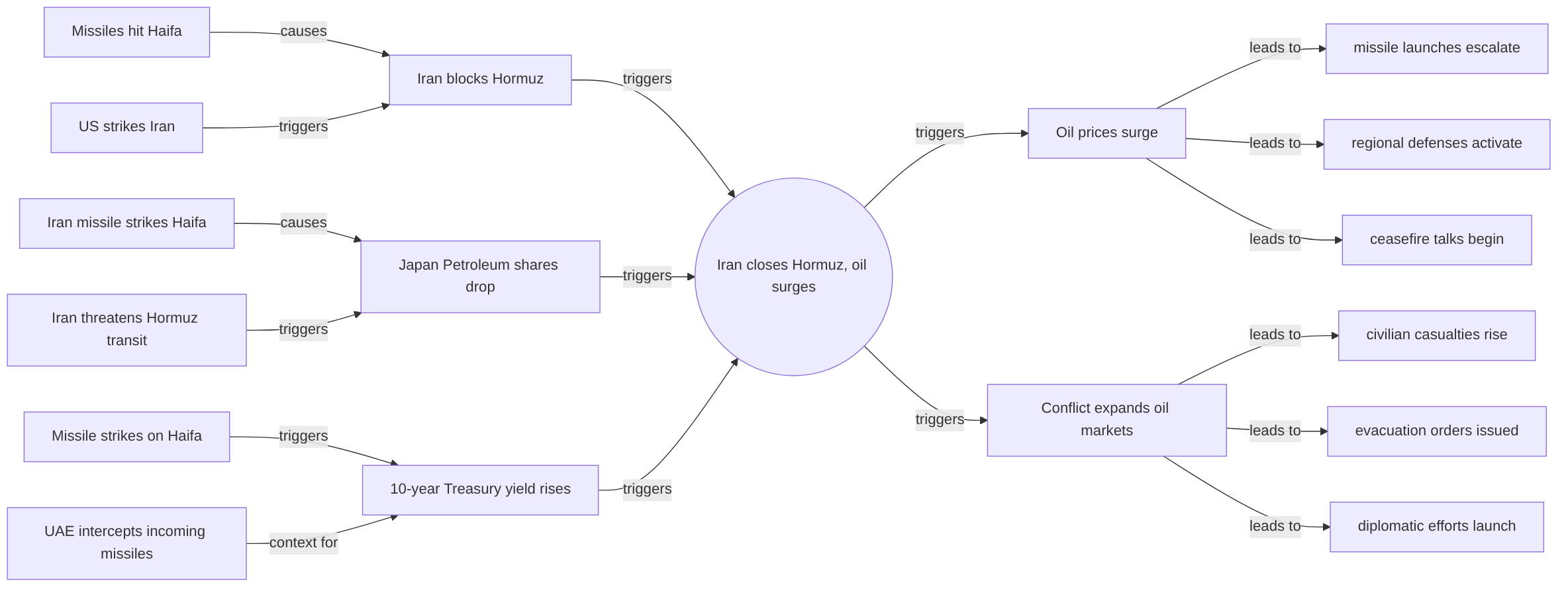
Iran blocks Hormuz: Threatening to close the Strait of Hormuz, Iran sparks a global supply panic that drives oil prices higher. ↗ source
Japan Petroleum shares drop: Fear of Iran closing the Strait of Hormuz drove Japan Petroleum Exploration stock prices lower. ↗ source
10-year Treasury yield rises: Rising yields reflect market flight to safety as Iran threatens the Strait of Hormuz. ↗ source
Read analysis
Escalating hostilities between Iran and Israel, marked by missile strikes on Haifa and defensive interceptions across the Middle East, have directly triggered a sharp spike in global oil and energy prices. This immediate volatility is underpinned by broader macroeconomic pressures, including the Federal Reserve's decision to hold interest rates steady and growing concerns over the disruption to global energy supplies caused by the widening regional conflict. The pattern highlights how geopolitical flashpoints in the Middle East can rapidly override standard economic indicators, sending shockwaves through energy markets and investor sentiment alike.
What comes next
Oil prices surge: Global energy costs spike as Strait of Hormuz closure threatens supply chains.
↳ missile launches escalate
↳ regional defenses activate
↳ ceasefire talks begin
Conflict expands oil markets: Military strikes intensify across Israel, Lebanon, and Gulf states amid rising tensions.
↳ civilian casualties rise
↳ evacuation orders issued
↳ diplomatic efforts launch
Read analysis
The sudden closure of the Strait of Hormuz by Iran has injected immediate volatility into global markets, forcing investors to brace for potential supply shocks that could drive crude prices higher. While Japan Petroleum Exploration shares tumbled sharply on fears of disrupted operations, the broader market reaction was also evident as the 10-year Treasury yield climbed, reflecting growing anxiety over inflation and geopolitical instability. Traders will now closely monitor whether diplomatic efforts can reopen the waterway or if further strikes on energy infrastructure will deepen the crisis. Any escalation in the conflict could trigger a sustained rally in energy stocks, while a de-escalation might offer a brief reprieve for risk assets. Ultimately, the next few days will determine if this surge in oil prices becomes a temporary spike or a structural shift in the energy landscape.