Oil surges as Iran restricts Strait of Hormuz traffic
April 19, 2026
What This Means
Oil prices will climb further: Recent reports of Iran firing on tankers and hitting container vessels in the Strait of Hormuz suggest that Commodities face immediate supply risks that could outpace any temporary relief from traffic resumption.
Energy stocks are set to outperform: As Geopolitics continue to drive volatility, the sharp 13-14% pullback in oil following a ceasefire announcement indicates that Equities in the energy sector are poised to rally as investors price in the potential for renewed conflict.
This reflects observable market data. Individual situations vary — always verify with your own research.
Today's Summary
- Oil / Energy Prices
Top Signals
- Geopolitics: Oil rises as Iran restricts Strait of Hormuz traffic. (fired on tanker, hit container vessel) ↗ source
- Commodities: Oil prices surge on Middle East conflict. (surged) ↗ source
- Commodities: Oil fell about 10% on prospect of Strait of Hormuz traffic resuming. (fell about 10%) ↗ source
- Equities: Global stocks jump on prospect of Strait of Hormuz traffic resuming. (jumped) ↗ source
- Commodities: Oil prices fell 13-14% after ceasefire announcement. (13-14%) ↗ source
Read analysis
Tensions in the Middle East spiked when Iran re-imposed restrictions on commercial vessels in the Strait of Hormuz, triggering an immediate surge in Commodities as fears of a supply blockade took hold. The volatility intensified after reports emerged that a tanker had been fired upon and a container vessel struck, causing Geopolitics to dominate market sentiment and sending energy prices soaring. However, the rally proved short-lived as the prospect of marine traffic resuming led Commodities to pull back sharply, while global Equities jumped in response to the de-escalation. This rapid swing highlights how fragile the balance remains between conflict and the reopening of critical shipping lanes.
Why it happened
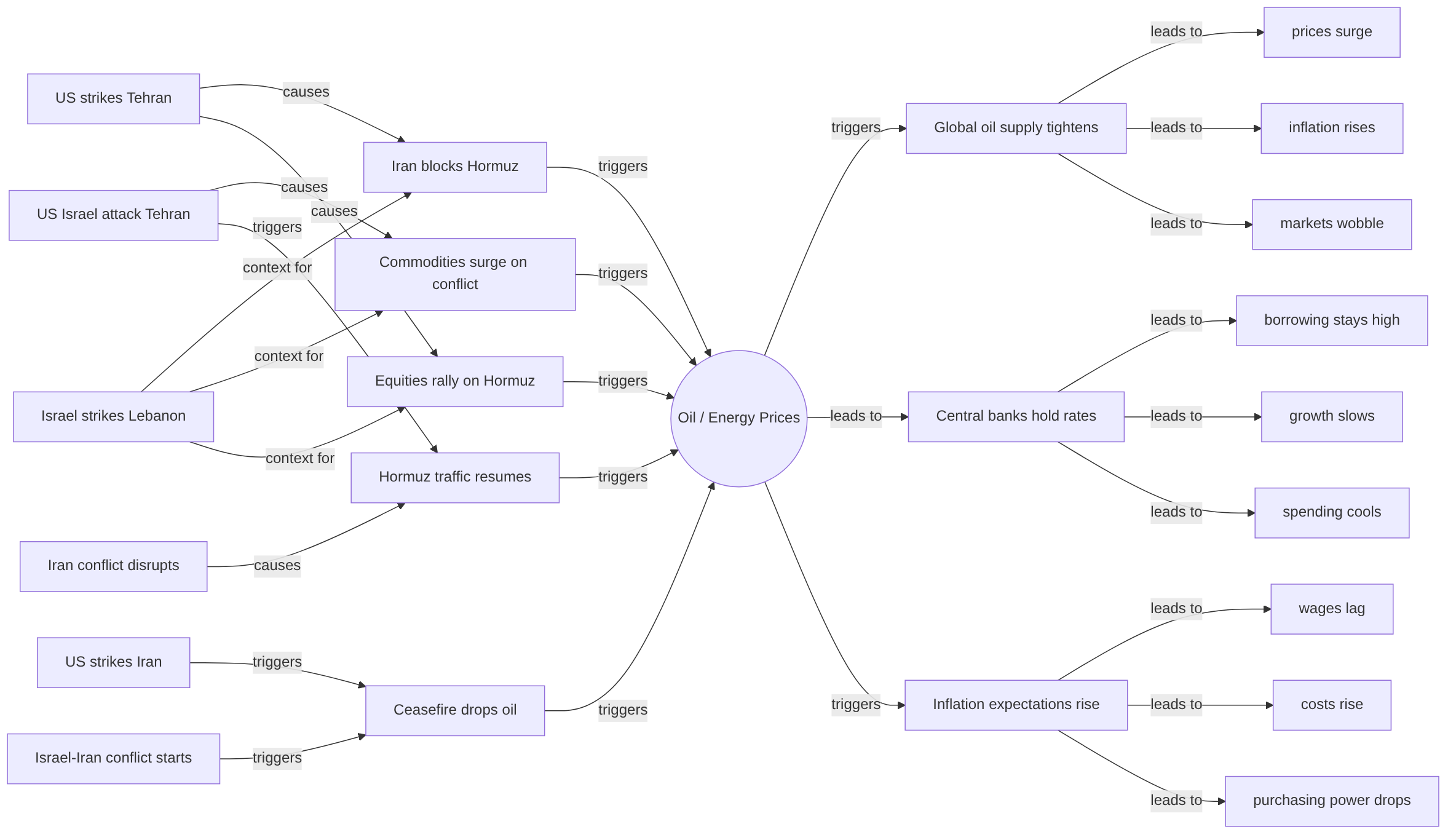
Iran blocks Hormuz: Iranian restrictions on the Strait of Hormuz drive up Commodities prices amid rising Geopolitics tensions. ↗ source
Commodities surge on conflict: Escalating Geopolitics in the Middle East drives a sharp rise in global Commodities prices. ↗ source
Hormuz traffic resumes: Resuming traffic eased Commodities fears, sending Oil / Energy Prices down 10%. ↗ source
Equities rally on Hormuz: Global Equities surged as hopes for resumed Commodities shipping through the Strait of Hormuz lifted investor sentiment. ↗ source
Ceasefire drops oil: A ceasefire announcement caused Commodities prices to fall sharply by 13 to 14 percent. ↗ source
Read analysis
The immediate surge in Commodities prices was triggered by the escalation of the Israel-Iran conflict, which began on February 28, 2026, and intensified following a joint U.S.-Israeli attack on Tehran that severely disrupted global fuel and gas supplies. This volatility stems from deepening Geopolitics tensions, including retaliatory strikes in Lebanon and missile intercepts by Saudi Arabia, which have collectively created the largest supply shock in history. Such events underscore how fragile Commodities markets remain when Geopolitics collide with critical energy infrastructure, sending ripples through Equities and inflation expectations worldwide.
What comes next
Global oil supply tightens: Major conflict and refinery fires slash fuel availability worldwide.
↳ prices surge
↳ inflation rises
↳ markets wobble
Central banks hold rates: Rising energy costs force monetary authorities to pause easing.
↳ borrowing stays high
↳ growth slows
↳ spending cools
Inflation expectations rise: Energy shocks push consumer prices above target levels.
↳ wages lag
↳ costs rise
↳ purchasing power drops
Read analysis
The volatile interplay between Geopolitics and Commodities suggests that the Strait of Hormuz remains the critical flashpoint for Commodities markets in the coming days. While Equities rallied on hopes of resumed traffic, the recent escalation involving US forces and Iranian strikes indicates that supply disruptions could return with little warning. Investors should closely monitor WTI crude for sharp swings as any renewed threat to maritime lanes would immediately reignite inflation fears. Furthermore, the stated US intent to withdraw within weeks adds a layer of uncertainty that could destabilize Commodities if diplomatic efforts falter. Ultimately, the resilience of Equities will depend on whether Geopolitics allows for a sustained de-escalation or triggers further conflict in the region.