Oil surges on Iran strike fears as stocks hit highs
April 18, 2026
What This Means
Oil prices will climb further: Despite today's 10% plunge to $82 per barrel, the threat of military strikes on Iran's Kharg Island by Donald Trump suggests that supply disruptions remain a credible risk that could reverse recent gains.
The dollar will weaken: As Treasury yields fell sharply and the Nasdaq rallied to record highs on hopes for a lasting end to hostilities, investors are likely to shift away from safe-haven assets, driving down the value of the currency.
This reflects observable market data. Individual situations vary — always verify with your own research.
Today's Summary
- Stock Market (Equities)
Top Signals
- Donald Trump: Threatens military strikes on Iran's Kharg Island ↗ source
- Nasdaq: Hits record highs on peace hopes (49447) ↗ source
- Treasury yields: Fall sharply after Strait of Hormuz opens ↗ source
Read analysis
Markets surged to record highs after Donald Trump threatened military strikes on Iran, only to reverse course when the prospect of the Strait of Hormuz reopening sparked hopes for a lasting end to hostilities. This sudden shift in geopolitical tension caused Treasury yields to fall sharply as investors priced in a return to normal maritime traffic, while crude oil prices plunged 10 percent to $82 per barrel. The relief that major energy chokepoints would remain open drove the Nasdaq and S&P 500 to new peaks, reflecting a collective market belief that the immediate risk of conflict had significantly diminished.
Why it happened
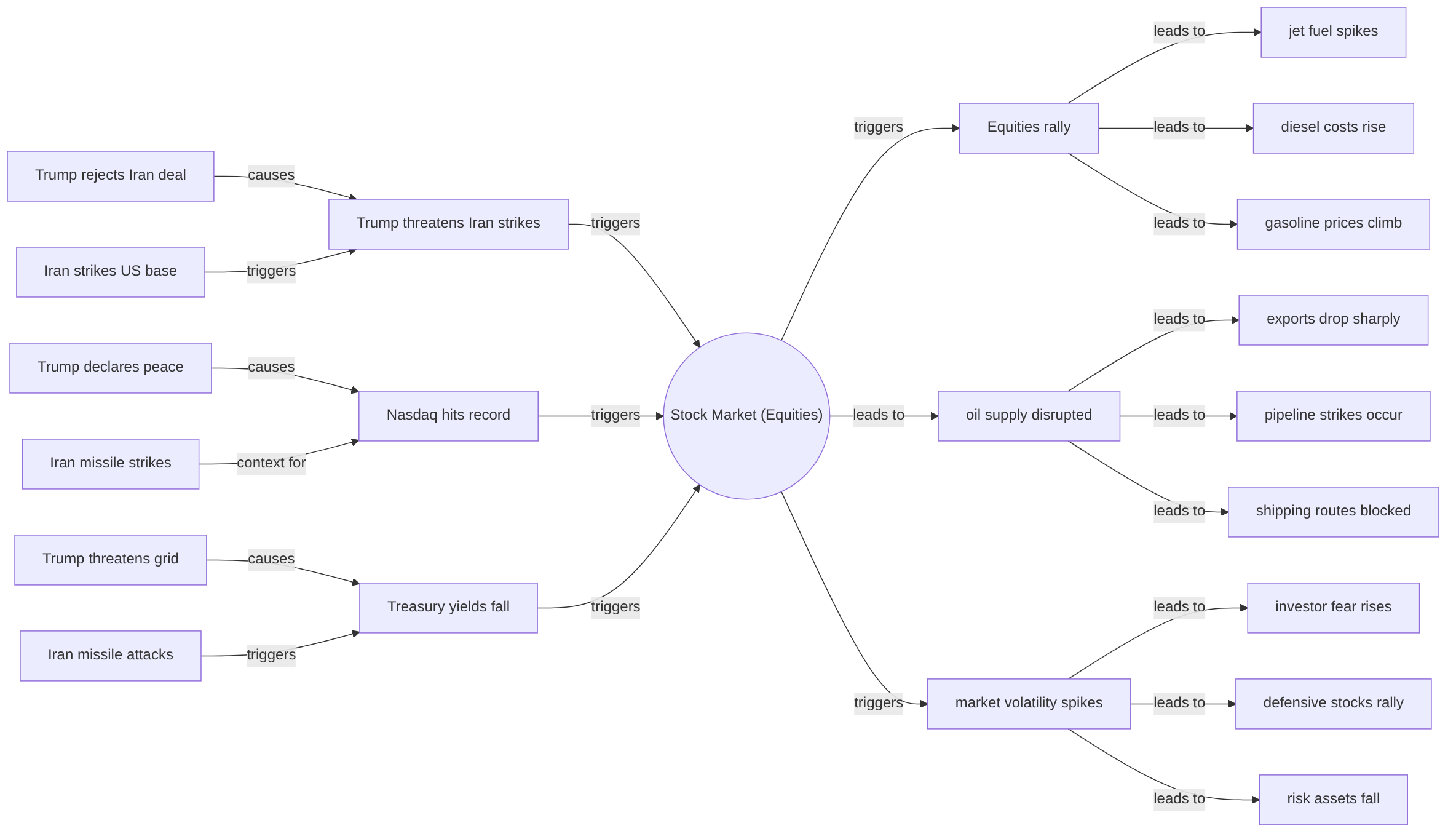
Trump threatens Iran strikes: Threatened military action on Iranian energy hubs spooked investors and drove equity markets lower. ↗ source
Nasdaq hits record: Investor optimism over peace prospects drove the Nasdaq to unprecedented levels. ↗ source
Treasury yields fall: Sharp declines in Treasury yields following the Strait of Hormuz opening boosted Nasdaq sentiment. ↗ source
Read analysis
Escalating tensions between the United States and Iran, marked by Donald Trump's refusal to negotiate and subsequent military strikes, have triggered a sharp sell-off in the Nasdaq as investors flee risk assets amid fears of a wider regional war. This immediate volatility stems from a volatile backdrop where Donald Trump threatened to bomb Iran's power grid if the Strait of Hormuz remained closed, while Israeli attacks and retaliatory missile launches have already disrupted global energy supplies. The resulting surge in Treasury yields reflects a market brace for higher inflation and prolonged instability, signaling that geopolitical friction is rapidly overriding economic fundamentals.
What comes next
Equities rally: Conflict in the Middle East sends crude and fuel costs soaring globally.
↳ jet fuel spikes
↳ diesel costs rise
↳ gasoline prices climb
oil supply disrupted: Attacks on infrastructure and the Strait of Hormuz threaten global energy flows.
↳ exports drop sharply
↳ pipeline strikes occur
↳ shipping routes blocked
market volatility spikes: Escalating military tensions and geopolitical uncertainty drive sharp swings in equity valuations.
↳ investor fear rises
↳ defensive stocks rally
↳ risk assets fall
Read analysis
With Donald Trump threatening military strikes on Kharg Island, the sudden reopening of the Strait of Hormuz has triggered a dramatic reversal, sending Treasury yields lower as investors bet on a de-escalation of hostilities. This shift in sentiment propelled the Nasdaq and S&P 500 to record highs while crude oil prices plummeted 10 percent to $82 per barrel as fears of a prolonged supply shock receded. Future market direction will hinge on whether the current diplomatic breakthrough holds or if renewed tensions in the region force a rapid re-pricing of energy assets. Investors should monitor the stability of tanker traffic through the strait, as any disruption could quickly undo the recent gains in equities and the relief seen in bond markets.