Oil surges 8.6% to $104.88 amid Iran threats
April 13, 2026
What This Means
Oil prices will climb further: With Iran threatening to treat any military vessels near the Strait of Hormuz as a ceasefire violation while U.S. forces prepare a maritime blockade, the threat of a severe supply disruption is driving WTI above $104.88 and signaling that current levels are just the beginning.
Equity markets face a correction: The Dow Futures already dropped 502 points as investors brace for inflationary pressure, with UBS analysts warning that a prolonged conflict could force the ECB to implement additional rate hikes, further dampening economic growth and corporate earnings.
This reflects observable market data. Individual situations vary — always verify with your own research.
Today's Summary
- Oil / Energy Prices
Top Signals
- Iran: Iran threatens blockade causing oil supply fears ↗ source
- Dow Futures: Dow futures fall sharply amid oil crisis (502 points) ↗ source
- UBS: UBS analysts warn that Middle East conflict threatens supply and ECB hikes (25 bps) ↗ source
Read analysis
Tensions in the Middle East have escalated sharply after Iran warned that any military vessels approaching the Strait of Hormuz would face severe consequences, prompting fears of a critical supply disruption. In response, the United States Navy moved to enforce a blockade of maritime traffic entering and exiting Iranian ports, driving West Texas Intermediate prices above $100 per barrel. This surge in energy costs has rattled global markets, causing Dow Futures to drop significantly as investors brace for potential economic fallout. Furthermore, UBS analysts caution that if the conflict continues to restrict oil and gas supplies, the European Central Bank may be forced to implement additional rate hikes to combat rising inflation.
Why it happened
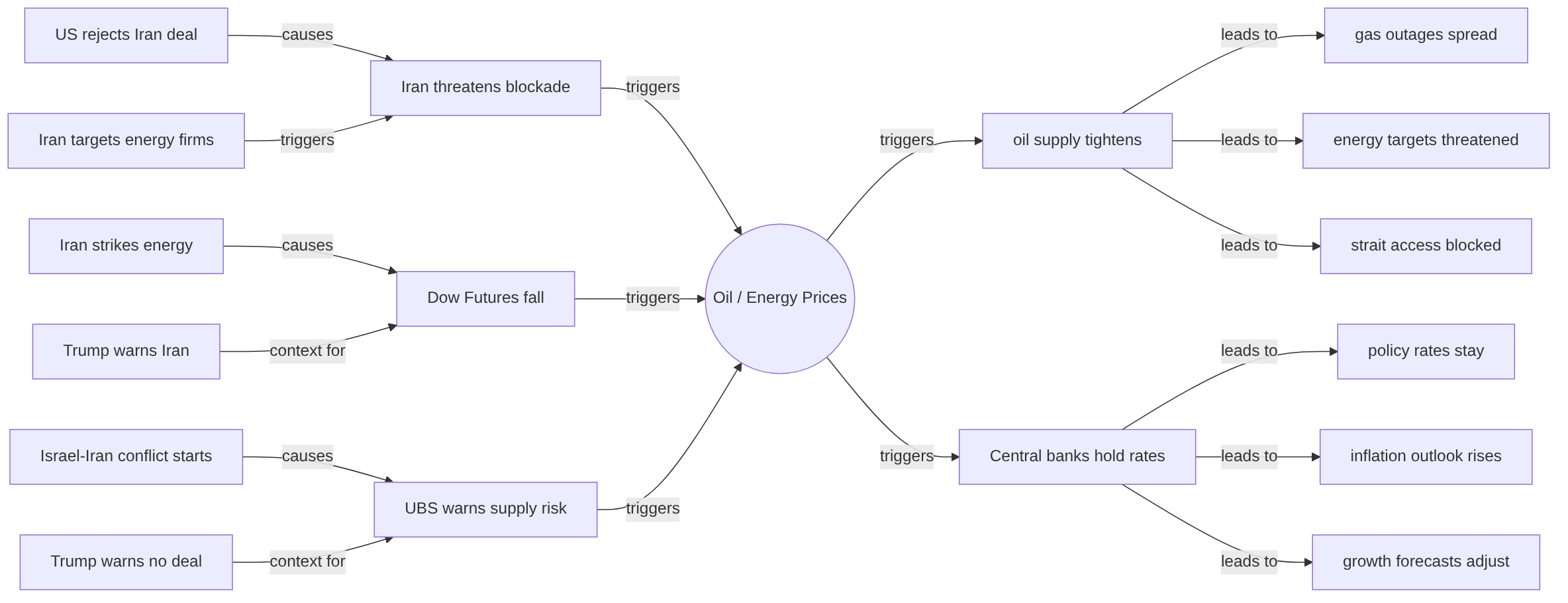
Iran threatens blockade: Threats of a blockade by Iran spark immediate fears of supply disruption in global oil markets. ↗ source
Dow Futures fall: Market panic over the Iran conflict sends Dow Futures tumbling as oil prices surge. ↗ source
UBS warns supply risk: UBS analysts warn that Middle East conflict threatens supply and ECB hikes. UBS highlights the risk to Iran energy stability. ↗ source
Read analysis
Escalating tensions in the Middle East, specifically attacks on Iran's energy infrastructure and the subsequent disruption of fuel supplies, have directly pressured global oil markets. These immediate shocks are compounded by broader geopolitical instability, including missile strikes on Saudi Arabia and diplomatic uncertainty following a White House address, while major central banks maintain steady interest rates that influence capital flows. This pattern underscores how regional conflicts can rapidly override economic fundamentals to drive energy price volatility.
What comes next
oil supply tightens: Middle East conflict disrupts fuel flows, pushing West Texas Intermediate prices above $112 a barrel.
↳ gas outages spread
↳ energy targets threatened
↳ strait access blocked
Central banks hold rates: RBI and Fed keep interest rates steady to manage inflation risks from rising energy costs.
↳ policy rates stay
↳ inflation outlook rises
↳ growth forecasts adjust
Read analysis
With Iran threatening to treat any military vessels near the Strait of Hormuz as a ceasefire violation, the market now braces for a potential supply shock that has already pushed West Texas Intermediate above $104. Investors should monitor whether Dow Futures can stabilize after their sharp decline, as the prospect of sustained energy disruptions continues to weigh on global growth expectations. UBS analysts warn that if the conflict restricts oil and gas flows for an extended period, the European Central Bank may be forced to implement additional rate hikes to combat rising inflation. The coming days will be critical in determining if these geopolitical tensions translate into a prolonged commodity rally or if diplomatic de-escalation restores calm to the energy sector.