Iran strikes Gulf energy, gasoline jumps $1.20
April 12, 2026
What This Means
Oil prices will climb further: The de facto closure of the Strait of Hormuz following attacks on Qatar's infrastructure creates an immediate supply bottleneck that will drive crude costs higher. This escalation is already fueling panic, as evidenced by San Francisco midgrade gasoline prices surging from $4.875 to $6.072 per gallon in just weeks.
Energy stocks are set to outperform: With the United States and Iran locked in a cycle of airstrikes that killed the former Iranian Supreme Leader, the resulting geopolitical instability ensures sustained volatility in the sector. This tension is reflected in the broader economy, where the energy-related CPI index jumped 10.9% month-over-month, signaling that energy costs will remain a dominant driver of market performance.
This reflects observable market data. Individual situations vary — always verify with your own research.
Today's Summary
- Iranian attacks on Gulf infrastructure and leadership trigger a massive energy price surge.
Top Signals
- Iran: Iran attacks infrastructure causing supply disruption (de facto closure) ↗ source
- United States: Annual inflation surges to 3.3 percent in March (3.3%) ↗ source
- San Francisco: Midgrade gasoline prices in San Francisco increased from $4.875 to $6.072 per gallon ($6.072) ↗ source
Read analysis
Oil and energy markets surged following a dramatic escalation in tensions between the United States and Iran, triggered by airstrikes that eliminated key Iranian leadership and a subsequent retaliatory attack that effectively closed the Strait of Hormuz. This geopolitical shockwave immediately disrupted global supply expectations, driving a sharp spike in local costs where midgrade gasoline in San Francisco jumped significantly over the past few weeks. The immediate impact on consumer prices was severe, with the energy-related CPI index leaping 10.9% month-over-month and annual inflation climbing to 3.3% as the region grapples with the sudden scarcity.
Why it happened
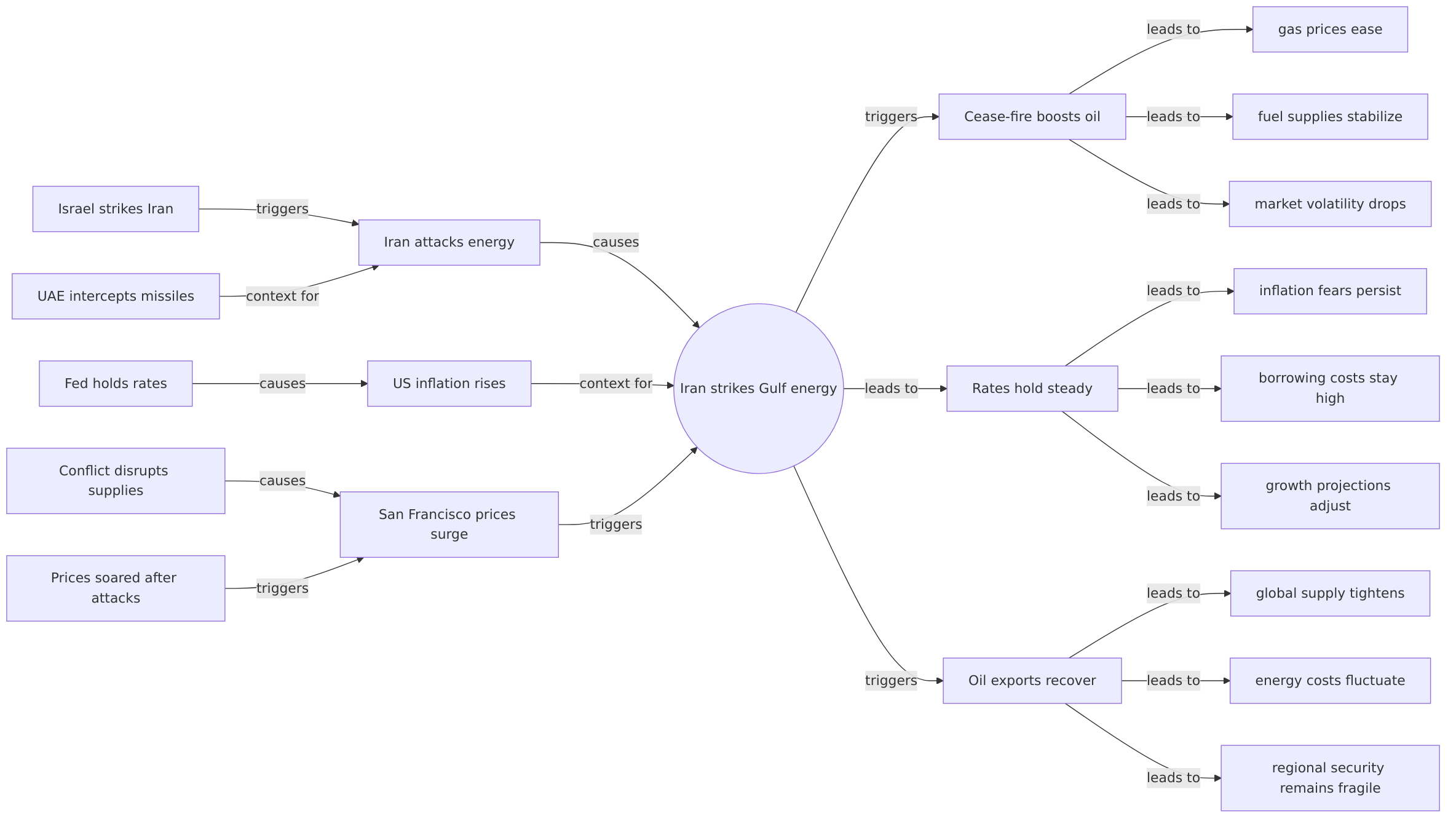
Iran attacks energy: Attacks on infrastructure by Iran disrupt supplies and spike oil prices. ↗ source
US inflation rises: Rising prices in the United States heighten sensitivity to energy shocks from Iran. ↗ source
↳ Fed holds rates: The Federal Reserve maintained rates while United States inflation climbed to 3.3 percent. ↗ source
San Francisco prices surge: Soaring local fuel costs in San Francisco directly elevate regional energy price benchmarks. ↗ source
Read analysis
Tensions in the energy sector were directly fueled by a fragile two-week cease-fire between Iran and the United States, alongside reports that Iran's oil exports have risen to their highest levels in months. This volatility occurred against a backdrop of global market uncertainty, where major central banks like the Federal Reserve and the Reserve Bank of India held interest rates steady while the United States saw sharp declines in its stock indices. The interplay between diplomatic de-escalation and persistent monetary caution suggests that energy markets remain highly sensitive to geopolitical shifts even as economic policy stabilizes.
What comes next
Cease-fire boosts oil: A two-week truce brokered by Pakistan halts immediate hostilities in the Gulf.
↳ gas prices ease
↳ fuel supplies stabilize
↳ market volatility drops
Rates hold steady: Major economies including the US and India maintain current interest rates amid inflation concerns.
↳ inflation fears persist
↳ borrowing costs stay high
↳ growth projections adjust
Oil exports recover: Iranian crude shipments rise slightly as conflict tensions temporarily subside.
↳ global supply tightens
↳ energy costs fluctuate
↳ regional security remains fragile
Read analysis
The de facto closure of the Strait of Hormuz following Iran's attack on Qatar's infrastructure signals a severe supply shock that will likely keep crude prices volatile as United States forces engage in ongoing regional defense operations. Investors should monitor how quickly San Francisco gasoline prices, which have already surged past $6 per gallon, influence broader consumer sentiment and the Federal Reserve's response to the 10.9% monthly energy inflation spike. If diplomatic talks led by Egypt fail to reopen the waterway, the annual inflation rate of 3.3% could force a sharper monetary tightening that weighs heavily on the S&P 500. Ultimately, the stability of WTI and the XLE sector depends on whether the United States can secure the airspace without triggering a wider escalation that further disrupts global oil flows.